Breast Fat Transfer West Palm Beach, FLorida
Breast fat transfer, also known as breast fat grafting or autologous fat transfer, is a cosmetic fat transfer procedure that uses a patient’s own fat to add volume, refine breast contours and address selected areas of asymmetry. The procedure combines liposuction with fat grafting, allowing fat to be removed from one area of the body and transferred to the breasts.
At Synergy Cosmetic Surgery & Med Spa in West Palm Beach, Dr Steven Chang develops individualized surgical plans based on each patient’s anatomy, breast proportions and aesthetic goals. Breast fat transfer may be an option for patients seeking modest breast enhancement without implants or those who want to improve selected contour irregularities.
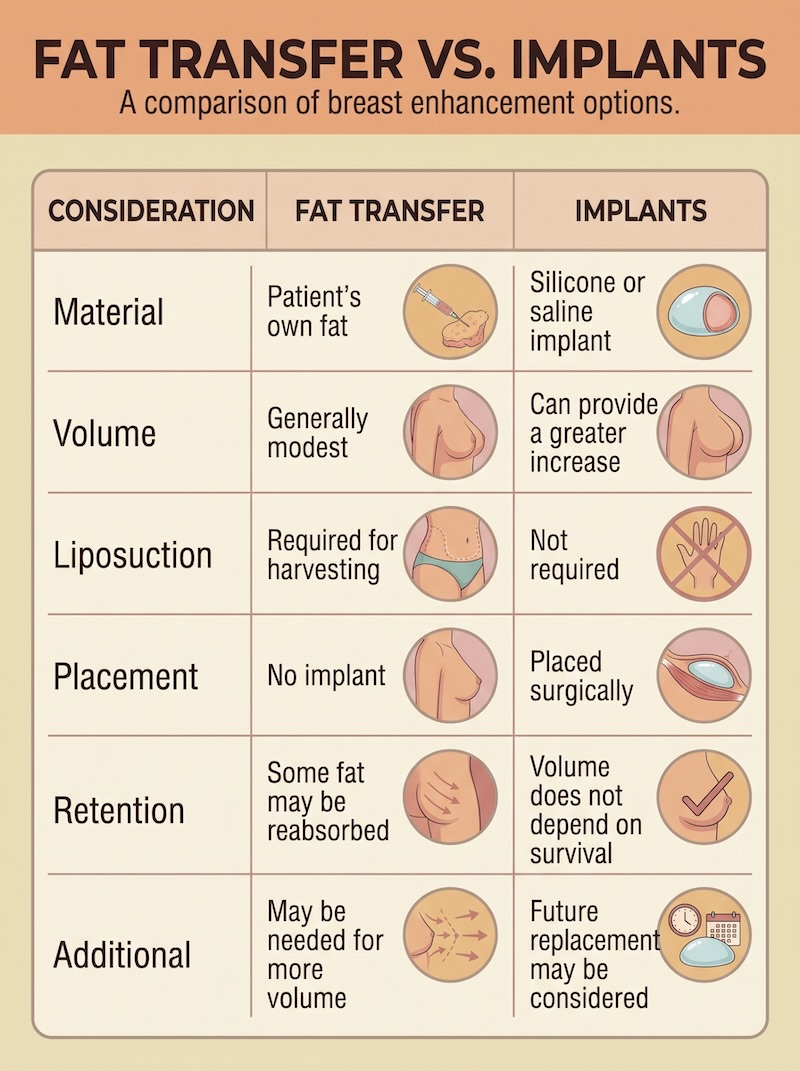
Unlike traditional breast augmentation, which uses implants to increase breast size, fat transfer uses the patient’s own harvested tissue. The amount of volume that can be added is generally more limited and some of the transferred fat is naturally reabsorbed during healing. The final result depends on available donor fat, recipient tissue characteristics and individual healing.
For a limited time, consultations are free—a $300 value—call or text us at 561-888-6720 to book.
What Is Breast Fat Transfer?
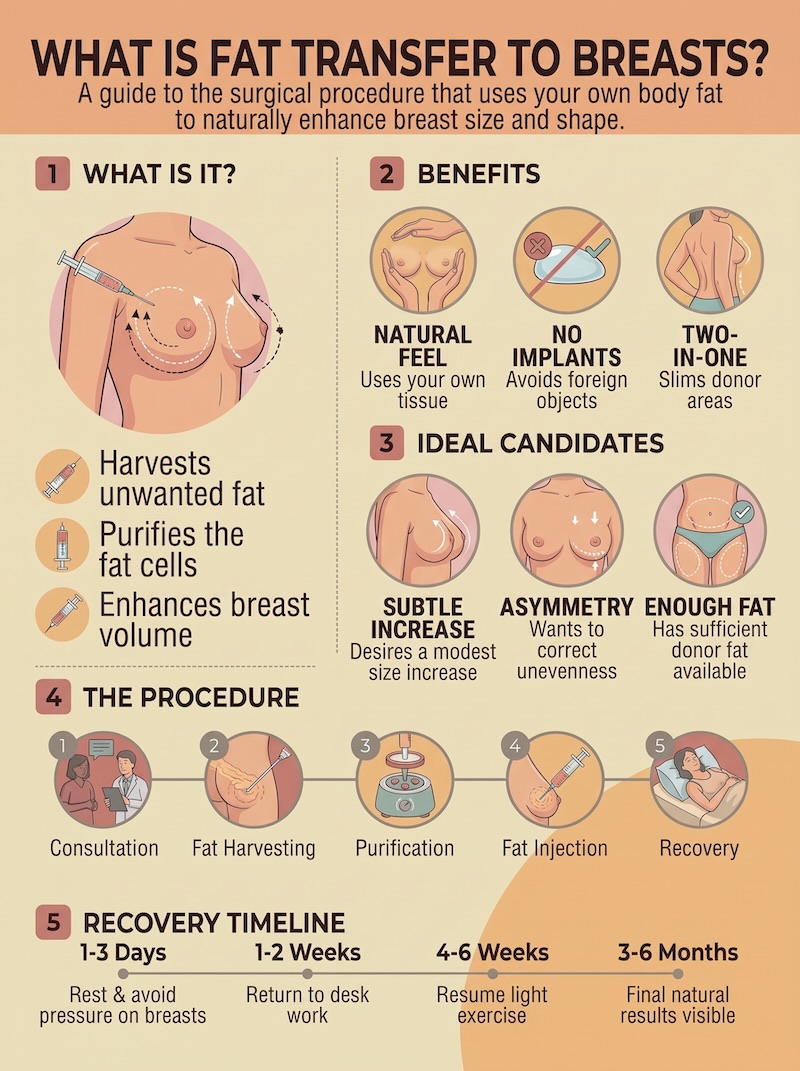
Breast fat transfer is a minimally invasive surgical procedure that moves fat from a donor area of the body into the breasts. It combines two techniques: liposuction to harvest fat and fat grafting to place the prepared fat into the breast tissue.
The procedure generally involves three stages.
1. Fat Harvesting Through Liposuction
Fat is removed from selected donor areas using liposuction. Common locations include the abdomen, flanks, hips and thighs. The donor areas are selected based on the patient’s anatomy and the amount of available fat.
2. Fat Processing
The harvested fat is carefully prepared to separate usable fat from excess fluid, blood and other unwanted material.
3. Fat Transfer to the Breasts
The prepared fat is transferred into selected areas of the breasts using specialized instruments. Dr Chang carefully distributes the fat to support the desired volume and contour.
The transferred fat must establish a blood supply in its new location to survive. Some of the injected fat is naturally reabsorbed, so the initial volume placed will not necessarily equal the final breast size.
Potential Benefits of Breast Fat Transfer
For appropriately selected patients, breast fat transfer may offer several potential advantages:
- Uses your own fat: The procedure uses tissue harvested from your body rather than synthetic breast implants.
- Modest volume enhancement: Fat grafting may provide a relatively subtle increase in breast fullness.
- Contour refinement: Fat can be placed in selected areas to improve breast shape and address contour irregularities.
- Donor-area contouring: Liposuction reduces localized fat deposits in the area where fat is harvested.
- No breast implant: The procedure does not require placement of a silicone or saline implant.
- Potentially long-lasting results: Fat that establishes an adequate blood supply may remain as living tissue.
Breast fat transfer is not appropriate for every patient. The amount of enhancement is limited by available donor fat, the capacity of the breast tissue and how much transferred fat survives.
 Your Safety Comes First
Your safety is the highest priority at Synergy Cosmetic Surgery & Med Spa. Dr Steven Chang takes an individualized approach to every procedure, carefully evaluating your health, goals and candidacy to determine the most appropriate treatment plan. From your initial consultation through recovery, patient well-being, responsible surgical planning and attentive care remain central to every step of your experience.
What Areas Can Supply Fat for Breast Transfer?
Fat used for breast enhancement is typically harvested from areas with localized fat deposits. Common donor areas include:
- Abdomen: Fat from the upper or lower abdomen may be harvested to contour the stomach while supplying tissue for breast grafting.
- Flanks and Love Handles: Liposuction of the flanks may reduce localized fat around the waist while providing fat for transfer.
- Hips: Selected fat deposits around the hips may be used as a donor source, depending on the patient’s anatomy.
- Thighs: Fat from the inner or outer thighs may be considered when sufficient donor tissue is available.
The best donor areas depend on the patient’s body composition, fat distribution and surgical goals. Not every patient will have sufficient fat in every location.
Your aesthetic journey starts with a conversation. Schedule your free consultation (a $300 value) by calling or texting (561) 652-2295.
How Is Breast Fat Transfer Performed?
The procedure is customized according to the patient’s anatomy, donor fat availability and desired breast enhancement.
Consultation and Treatment Planning
Dr Chang evaluates breast anatomy, available donor fat, medical history and aesthetic goals. The surgical plan considers the amount of volume that may be appropriate and whether additional procedures are needed.
Fat Harvesting
Liposuction is performed to remove fat from selected donor areas, such as the abdomen, flanks, hips or thighs.
Fat Preparation
The harvested fat is processed to separate usable fat from excess fluid and other material before transfer.
Fat Placement
The prepared fat is carefully placed into selected areas of the breasts using specialized instruments and techniques. The placement approach is tailored to the patient’s anatomy and the intended contour.
Post-Procedure Care
Patients receive instructions for caring for both the liposuction donor areas and the breasts. Follow-up appointments allow the surgical team to monitor healing and evaluate the developing results.
Breast Fat Transfer vs. Breast Augmentation With Implants
Breast fat transfer and traditional breast augmentation both aim to enhance breast volume but they use different techniques and provide different types of results.
Breast Fat Transfer
Fat is harvested through liposuction, processed and transferred to the breasts. The procedure may provide modest volume enhancement and selected contour improvements without using implants. Results depend on how much transferred fat survives.
Breast Augmentation With Implants
Breast implants are surgically placed to increase breast size and shape. Implants generally allow for a more substantial and predictable increase in volume, with implant size and type selected according to the patient’s anatomy and goals.
Neither procedure is universally better. The appropriate choice depends on the patient’s desired breast size, anatomy, available donor fat, and preferences.
Breast Fat Transfer vs. Breast Lift
Breast fat transfer and breast lift surgery address different concerns.
Fat transfer adds volume to selected areas of the breast. A breast lift, also called mastopexy, removes excess skin and reshapes breast tissue to improve breast position and contour.
Patients with volume loss but relatively good breast position may be candidates for fat transfer alone. Patients with significant sagging or downward nipple positioning may need a breast lift, with or without additional volume enhancement.
In selected cases, fat grafting may be considered as part of a broader breast surgery plan.
Your aesthetic journey starts with a conversation. Schedule your free consultation (a $300 value) by calling or texting (561) 652-2295.
Awake Liposuction: A More Comfortable Approach
Most liposuction procedures at Synergy Cosmetic Surgery are performed using awake liposuction with local anesthesia, allowing eligible patients to remain conscious without the need for general anesthesia. This approach can reduce exposure to certain risks associated with general anesthesia, support a more streamlined recovery and offer an alternative for patients who prefer to avoid general anesthesia. Dr Steven Chang evaluates each patient to determine the most appropriate and safe approach based on the treatment area, extent of fat removal and individual needs.
Who Is a Candidate for Breast Fat Transfer?
Breast fat transfer may be appropriate for adults who want modest breast enhancement or contour refinement using their own fat.
Potential candidates generally:
- Want a relatively modest increase in breast volume.
- Have sufficient fat available in one or more donor areas.
- Are in suitable overall health for surgery.
- Have realistic expectations about the amount of volume that can be transferred and retained.
- Prefer to avoid breast implants.
- Have suitable breast tissue characteristics for fat grafting.
- Understand that some transferred fat may be naturally reabsorbed.
Patients seeking a substantial increase in breast size may be better candidates for traditional breast augmentation with implants. Patients with significant breast sagging may also need a breast lift to address excess skin and nipple position.
A free consultation with Dr Chang can help determine whether breast fat transfer is appropriate or whether another procedure would better address the patient’s goals.
Discover what’s possible with a complimentary consultation—a $300 value. Call or text (561) 652-2295 today.
When Will Breast Fat Transfer Results Be Visible?
Some breast volume changes may be noticeable shortly after surgery. However, swelling and the natural absorption of some transferred fat affect the appearance during healing.
Not all transferred fat survives in its new location. Fat that establishes an adequate blood supply may remain as living tissue, while some of the transferred volume is gradually reabsorbed by the body.
The final breast contour becomes clearer as swelling decreases and the retained fat stabilizes. This process takes time and varies by patient.
Weight fluctuations can also affect the results because transferred fat behaves like fat elsewhere in the body. Maintaining a relatively stable weight can help preserve the outcome.
Some patients may need an additional fat transfer procedure to achieve their desired volume.
Ready to take the next step? Schedule your free consultation—a $300 value—by calling or texting (561) 652-2295.
Recovery After Breast Fat Transfer
Recovery involves both the liposuction donor areas and the breast treatment areas. The recovery experience varies depending on the amount of fat harvested and transferred, surgical technique and individual healing.
Temporary effects may include:
- Swelling and bruising in the breasts and donor areas.
- Tenderness or soreness.
- Temporary changes in skin sensation.
- Firmness or small areas of irregularity as tissues heal.
- Small incision sites associated with fat harvesting and placement.
Patients may be advised to wear compression garments for the liposuction donor areas. Instructions for breast support garments and activity restrictions will depend on the surgical plan.
Patients should follow the Dr Chang’s guidance regarding sleeping position, exercise, lifting, breast support and other activities during recovery. The surgical team will provide individualized instructions and follow-up recommendations.
Facial Fat Transfer West Palm Beach With Dr Steven Chang
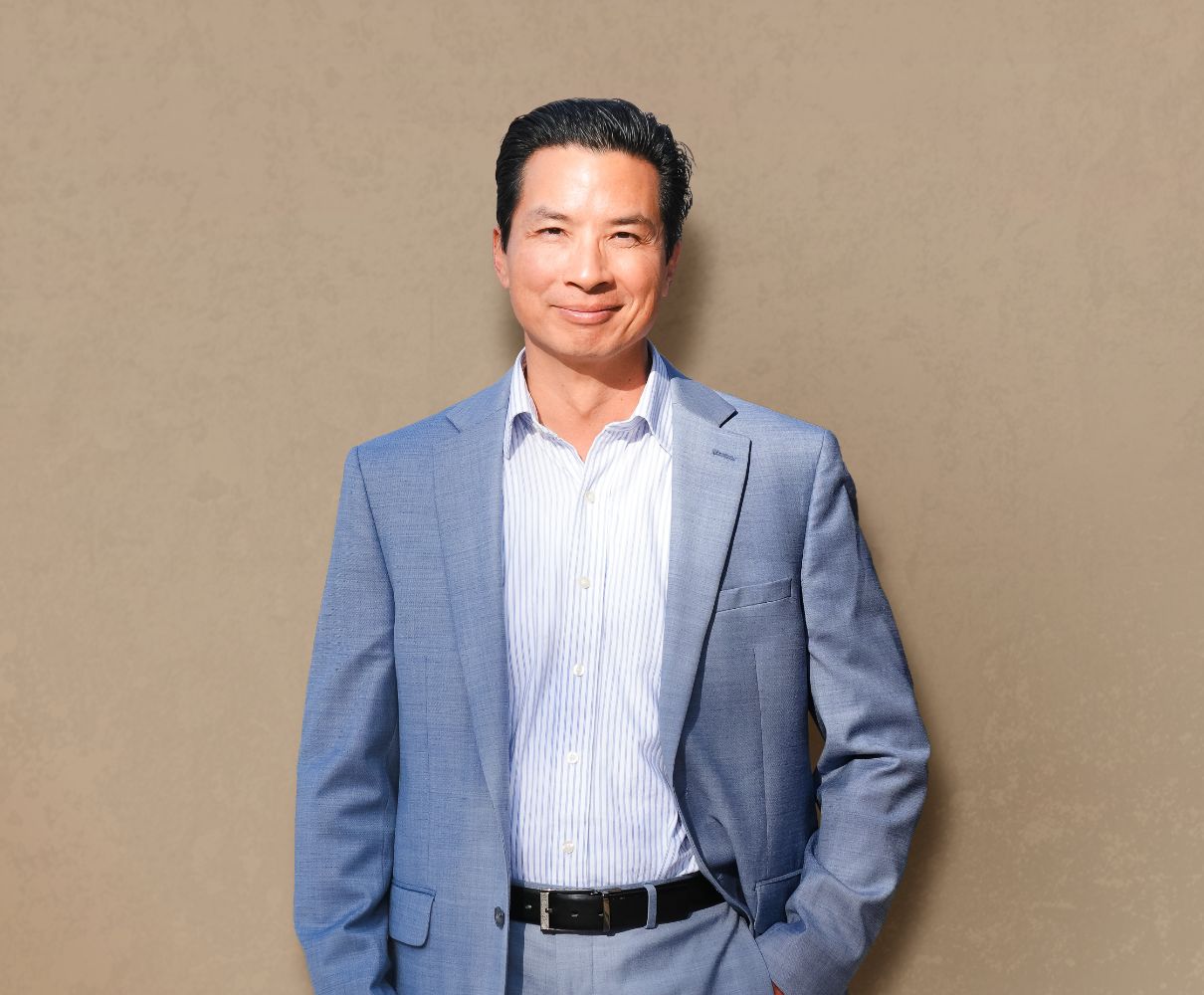
Dr Steven Chang brings more than 20 years of surgical experience to cosmetic surgery and body contouring. His background in complex surgery and microsurgery informs an approach that considers anatomy, proportions and the relationship between different facial features.
At Synergy Cosmetic Surgery & Med Spa, facial fat transfer West Palm Beach plans are developed around each patient’s facial structure, available donor fat and aesthetic goals. The objective is to restore volume where appropriate while maintaining balanced facial proportions.
A consultation can help determine whether facial fat transfer is an appropriate option and what results may realistically be expected.
For a limited time, enjoy a complimentary consultation—a $300 value. Call or text (561) 652-2295 to schedule yours today.
Frequently Asked Questions About Breast Fat Transfer West Palm Beach
What is breast fat transfer?
Breast fat transfer is a surgical fat grafting procedure that uses a patient’s own fat to enhance breast volume or improve contours. Fat is harvested through liposuction, processed, and transferred into selected areas of the breasts.
How is fat harvested for breast fat transfer?
Fat is generally harvested through liposuction from areas such as the abdomen, flanks, hips or thighs. The donor areas are selected based on the patient’s anatomy and available fat.
How much can breast fat transfer increase breast size?
Breast fat transfer generally provides a modest increase in volume compared with breast implants. The amount depends on available donor fat, the capacity of the breast tissue and how much transferred fat survives. A specific increase in cup size cannot be guaranteed.
Is breast fat transfer an alternative to breast implants?
Yes, for selected patients seeking modest breast enhancement. Fat transfer uses the patient’s own tissue and does not require an implant. However, it generally provides less predictable and more limited enlargement than traditional breast augmentation with implants.
Does breast fat transfer last permanently?
Fat that establishes a blood supply in its new location may remain as living tissue. However, some transferred fat is naturally reabsorbed. Weight changes can also affect long-term breast volume.
Will I need more than one breast fat transfer procedure?
Not necessarily. Some patients achieve their goals with one procedure, while others may need additional treatment if a significant amount of fat is reabsorbed or more volume is desired.
Can breast fat transfer correct breast asymmetry?
Fat transfer may help improve selected areas of breast asymmetry by adding volume where needed. The degree of correction depends on the underlying anatomy and the amount of fat that can be safely transferred.
Can breast fat transfer be combined with a breast lift?
In selected patients, fat transfer may be combined with a breast lift. The lift addresses excess skin and breast position, while fat grafting adds volume. The appropriate approach depends on breast anatomy and the patient’s goals.
Does breast fat transfer affect mammograms?
Breast fat transfer can produce changes in breast tissue, including fat necrosis, oil cysts and calcifications. These changes may appear on mammograms and sometimes require additional imaging or evaluation. Patients should inform their breast imaging providers about previous fat grafting.
Does breast fat transfer increase breast cancer risk?
Current clinical understanding has not established that appropriately performed autologous fat grafting increases breast cancer risk. However, breast fat transfer can create imaging changes that require evaluation. Patients should discuss personal breast health history and screening recommendations with their medical providers.
What is recovery like after breast fat transfer?
Recovery varies by patient and procedure. Swelling, bruising and tenderness may occur in both the breasts and liposuction donor areas. Patients may need compression garments for donor areas and specific instructions regarding breast support and physical activity.
Does breast fat transfer leave scars?
Small incisions are required for liposuction and fat placement. These generally leave small scars, although their visibility varies based on location, technique and individual healing.
Am I a candidate for breast fat transfer?
Candidates generally have sufficient donor fat, suitable overall health and realistic expectations about the amount of volume enhancement and fat retention. A free consultation with Dr Chang can help determine whether the procedure is appropriate.
Where can I get breast fat transfer West Palm Beach?
Synergy Cosmetic Surgery & Med Spa in West Palm Beach offers consultations with Dr Steven Chang to discuss breast fat transfer and other breast enhancement procedures. Call or text (561) 652-2295 to learn more.
Medical Disclaimer: This page is for educational purposes only and does not constitute medical advice. Breast fat transfer is a surgical procedure with potential risks and complications. Individual candidacy, treatment options, results, and recovery vary. A consultation with a qualified medical professional is necessary to determine an appropriate treatment plan.
Explore Your Breast Fat Transfer Options
If you are considering breast fat transfer West Palm Beach, a personalized free consultation can help you understand which options may be appropriate for you.
Contact Synergy Cosmetic Surgery and Med Spa in West Palm Beach to schedule a free consultation with Dr Steven Chang and learn more about your breast fat transfer options.
Ready to take the next step? Schedule your free consultation—a $300 value—by calling or texting (561) 652-2295.
Breast Fat Transfer West Palm Beach
If you’re searching for “breast fat transfer West Palm Beach”, Dr Chang at Synergy Cosmetic Surgery and Med Spa offers expert care in a welcoming, professional environment.
Book Your Free Consultation Today
Experience personalized breast fat transfer West Palm Beach focused on real results.
Breast Imaging and Other Considerations
One important consideration with breast fat transfer is that changes can occur in the breast tissue following fat grafting. Some transferred fat may not survive and can develop into areas of fat necrosis, oil cysts or calcifications.
These changes may appear on mammograms or other breast imaging studies. Many findings are benign, but some may require additional imaging or evaluation to distinguish post-procedure changes from other breast conditions.
Patients should discuss their breast health history, screening schedule and any existing breast concerns with their medical providers before surgery. It is also important to inform future imaging providers that breast fat grafting has been performed.
Breast fat transfer does not replace recommended breast cancer screening or routine medical care.
Risks and Considerations of Breast Fat Transfer
Breast fat transfer is a minimally invasive surgical procedure and as with any surgery there are risks, associated with both liposuction and fat grafting.
Potential complications include:
- Bleeding, bruising, and swelling.
- Infection.
- Changes in skin sensation.
- Scarring at donor and placement sites.
- Contour irregularities or asymmetry.
- Fat necrosis.
- Oil cysts and calcifications.
- Partial or unpredictable fat absorption.
- Need for additional procedures.
- Complications related to anesthesia or surgery.
The amount of fat that survives cannot be guaranteed. Some patients may experience less volume retention than expected or require additional treatment.
The risks, benefits and limitations will be discussed during your free consultation so patients can make an informed decision.